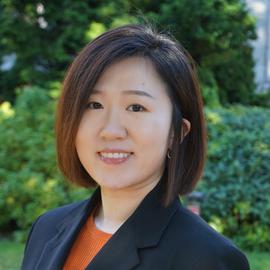
Welcome to my webpage!
I am an Assistant Professor at Singapore Management University, School of Economics. My research interests include international trade, industrial organization, and spatial economics. Before joining SMU, I received a Ph.D. in Strategy and Business Economics from University of British Columbia under the supervision of Keith Head and John Ries.
Download my CV .
Research
.js-id-working
Key Indicators for Asia and the Pacific 2016
Asian Development Bank, contributing analyst November 2016Key Indicators for Asia and the Pacific 2015
Asian Development Bank, contributing analyst October 2015Product Quality and the Mode of Entry to Foreign Markets
joint with Mostafa BeshkarTax Capacity, Fiscal Centralization, and Economic Growth: Evidence from the Single Whip Reform
joint with Wantong Li, Jianhuan XuMultinational Production and Investment Promotion: A CDC Approach
joint with Ignacio Marra de Artinano, Christian VolpeTrade Policy and (Critical) Mineral Value Chains
joint with Esther Boler, Jason Garred, Paul PelzlGVC Development Report: Beyond Production
joint with a team led by Mahinthan Mariasingham in ADB November 2011Teaching
Singapore Management University
COR2100 Economics and Society
University of British Columbia
COMM306 Urban Land Economics